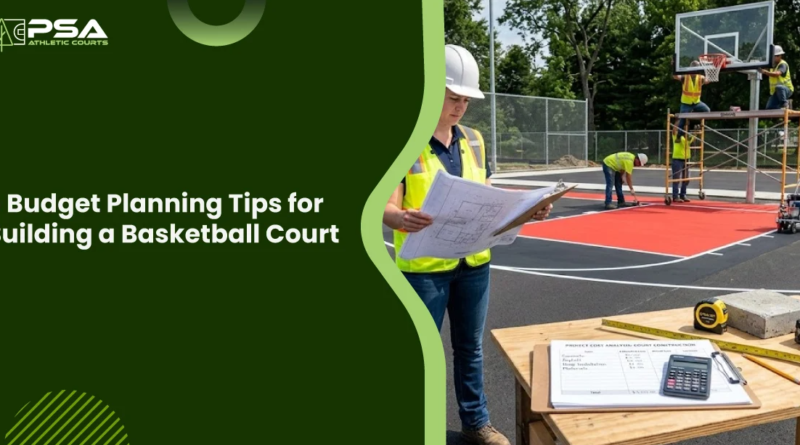
6 Budget Planning Tips from an Expert Basketball Court Builder
Building a basketball court is an exciting investment for homeowners, schools, and community facilities but without proper planning, costs can escalate quickly. Many projects go over budget not because of poor materials, but because key decisions weren’t made early enough.
Smart budgeting starts long before construction begins. Drawing on insights used by experienced basketball court builders, this guide outlines six practical planning tips that help keep projects efficient, durable, and financially sustainable.
1. Define the Purpose of the Basketball Court Early
The most important budget decision is understanding how the basketball court will be used.
Ask questions such as:
- Is the court for casual residential play or competitive use?
- Will it support youth programs, training, or leagues?
- Is it single-sport or multi-sport?
Clear answers prevent overspending on features that aren’t needed and help align materials and layout with actual use.
2. Choose Surface Materials Based on Long-Term Value
Surface selection plays a major role in both upfront and long-term costs. Different materials offer different balances of durability, maintenance, and performance.
Understanding common basketball court surface materials helps decision-makers avoid selecting options that look affordable initially but require frequent repairs later.
Planning surface performance over the full lifecycle of the court is one of the most effective budget-control strategies.
3. Plan the Court Size to Match the Available Space
Bigger is not always better.
Oversized courts increase:
- Excavation requirements
- Material usage
- Drainage complexity
- Maintenance obligations
Efficient court sizing ensures that the basketball court fits the space properly while maintaining safe play dimensions. This approach reduces unnecessary construction costs without compromising functionality.
4. Don’t Underestimate Site Preparation Costs
Site conditions often have the biggest impact on budget accuracy.
Key factors include:
- Soil stability
- Drainage needs
- Slope and grading
- Existing surface conditions
According to experienced outdoor court specialists such as Pine State Courts, addressing site preparation correctly from the start prevents structural issues that lead to costly rework and premature surface failure.
5. Work with a Qualified Basketball Court Contractor
Budget overruns frequently occur when projects are handled without specialized expertise. A professional basketball court contractor understands how to balance performance, durability, and cost efficiency.
Experienced contractors help:
- Avoid unnecessary design elements
- Select appropriate materials
- Optimize drainage and base construction
- Reduce long-term maintenance expenses
Choosing the right partner is often the most cost-effective decision in the entire project.
6. Invest in Design Expertise, Not Guesswork
Design mistakes are expensive to fix once construction begins.
Working with an experienced basketball court builder ensures:
- Proper court orientation
- Accurate line layouts
- Efficient material usage
- Long-term performance planning
Learning how to find the best basketball court designer near you can prevent design errors that inflate budgets and shorten court lifespan.
For property owners planning new installations, professional design teams like Pine State Courts help align budget expectations with realistic performance goals.
Final Thoughts
Budget planning for a basketball court isn’t about cutting corners, it’s about making informed decisions early. Clear goals, proper site evaluation, smart material selection, and experienced guidance all contribute to keeping projects on track financially.
When planned correctly, a basketball court becomes a long-term asset that delivers consistent performance without unexpected costs.